Javelin Weights for Female Athletes
Age Category | Weight | Length Range (cm)
U12 | 400g |170 - 195
U14 | 400g |170 - 195
U16 | 500g | 200 – 210
U18 | 500g | 200 - 210
U20 | 600g | 220 - 230
Senior | 600g | 220 - 230
M35–49 | 600g | 220 - 230
M50–74 | 500g | 200 - 210
M75+ | 400g | 170 - 195
Javelin Weights for Male Athletes
Age Category | Weight | Length Range (cm)
U12 | 400g| 170 - 195
U14 | 500g | 200 - 210
U16 | 600g | 220 - 230
U18 | 700g | 240 - 250
U20 | 800g | 260 - 270
Senior | 800g | 260 - 270
M34–49 | 800g | 260 - 270
M50–59 | 700g | 240 - 250
M60–69 | 600g | 220 - 230
M70-79 | 500g | 200 - 210
M80+ | 400g | 170 - 195
Which Rated Javelin do I need?
Nordic Javelin Ratings
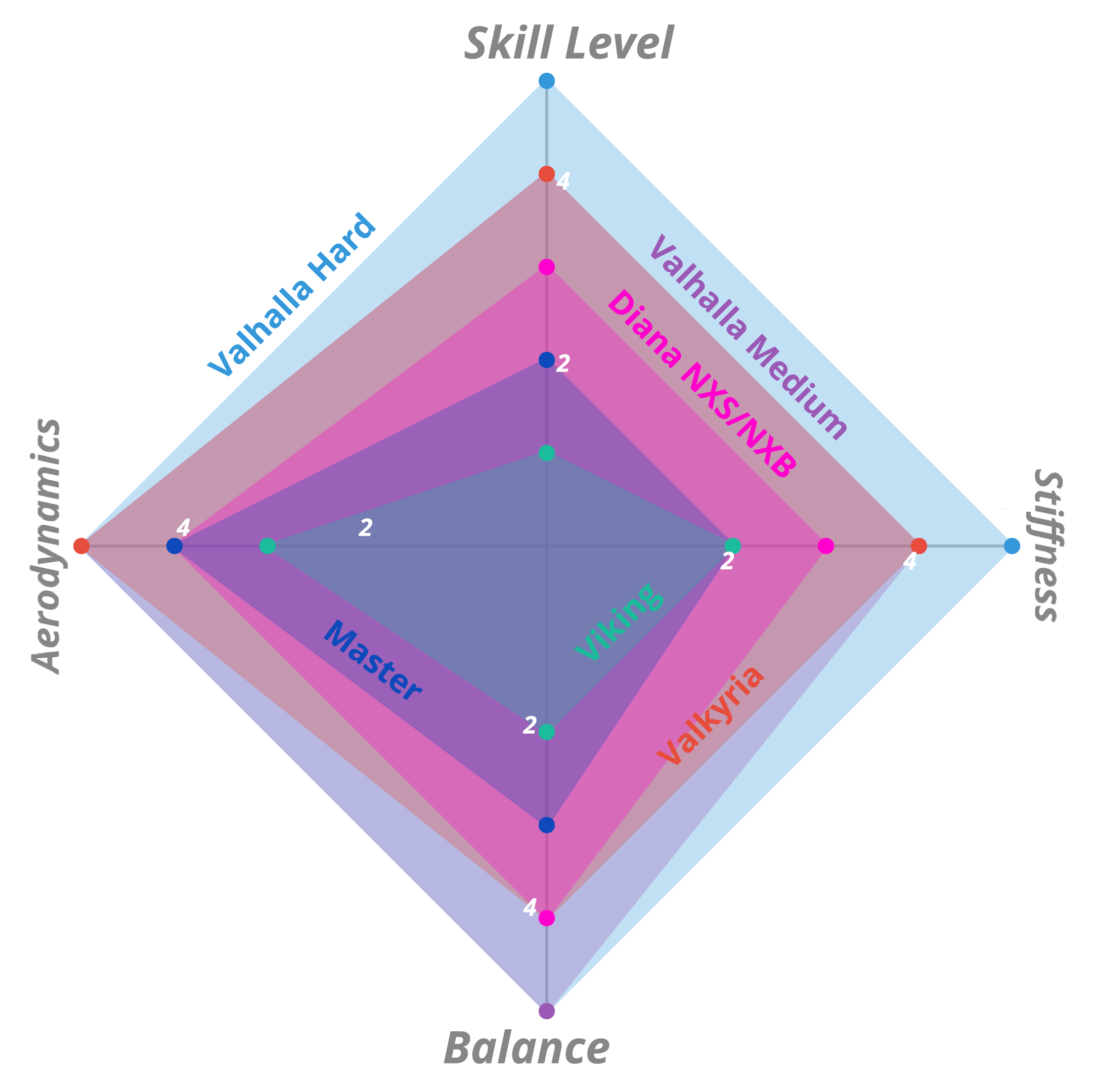
Nordic introduced a new rating system in 2022. This is based on the Stiffness, Skill Level, Aerodynamics and Balance for each javelin. They present this information in a circle which shows what kind of thrower the javelin suits.
Stiffness: The stiffer the javelin, the less it will flex/vibrate in the air and will result in less air drag. The down side is that it puts a lot more strain on the upper body. A soft javelin flexes/vibrates a lot, which can also be a very good thing is you are a less technical thrower.
Aerodynamics: This is the difference between throwing an iron pipe and a fine tuned javelin. The two most driving factors when it comes to the cost of a javelin is the choice of material & fine tuning of the geometry. Nordic have invested a lot of time to find the best aerodynamics for the longest flight depending of the stiffness & balance.
Balance: Balance together with aerodynamics will decide when in flight at a given velocity the javelin will turn it's tip towards the ground. If your javelin has a tendency to land flat you should try a javelin with lower level aerodynamics and balance.
Javelin Distance Rating
Some brands (e.g. Nemeth & Polanik) rate their javelins by distance. This is usually the optimum distance that the javelin will travel to land in the ground at 5 degrees. The distance rating is broadly affected by the stiffness of the javelin and its construction, as well as changing the centre of gravity.
If the centre of gravity of the javelin is optimised for 80m, it requires at least 70m to turn tip down. If it is thrown 50m or 60m it will almost certainly land tip first and therefore be a no-throw.
Javelin Flex Rating
Some brands (including some Nordic javelins) have Flex ratings. To find this rating, the tip and tail are placed on a surface and a weight is hung from the centre. The flex rating is the number of centimetres that the javelin bends down.
Javelins with higher flex ratings are softer and are more forgiving of beginner athletes and will reduce the risk of injury when the javelin is not released perfectly on point.
Javelins with lower flex ratings are stiffer and will vibrate less in the air, reducing drag and optimising energy transfer. The makes them fly further.
For a more detailed explanation of the different ratings and systems between various javelins, take a look at our "How To Choose A Javelin" .
We have partnered with top UK coach, David Turner to review your throwing and recommend specific implements personalised to you. Find out how here.